
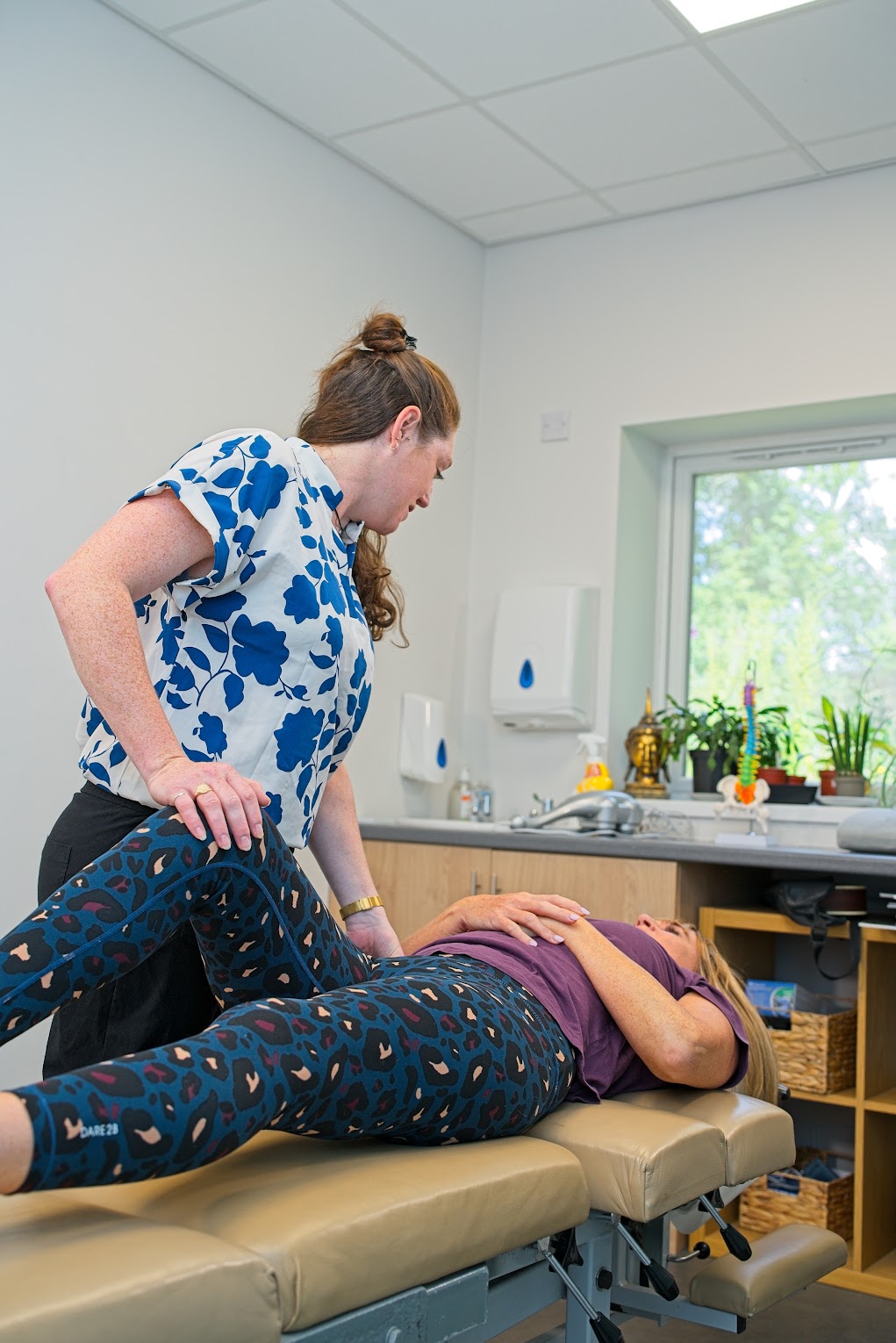
At Daventry Chiropractic, our chiropractors take time to understand your symptoms and how they affect your life. They consider how your hips, pelvis, knees, spine, ankles and feet are moving together.
Hip pain
Hip pain can be difficult to pinpoint.
You may feel it deep in your groin, across the front of your hip, at the outer hip, in your buttock or down your thigh.
You might notice pain when walking, getting dressed, climbing stairs, standing from a chair or lying on one side.
Some people find it harder to cross their legs, put on socks and shoes or get in and out of the car. You may also notice clicking, catching or difficulty moving your leg during certain activities. Sometimes hip pain feels sharp during a particular movement. Sometimes it becomes a persistent ache that gradually wears you down.
What can cause hip pain?
Hip pain can follow a fall, sport, lifting or a sudden increase in activity. It can also develop gradually through repeated movements or changes in how you use your body.
Sometimes, there is no obvious event that explains when the pain began.
The hip works closely with the pelvis, lower back, knee, ankle and foot. How these areas move together may influence how your hip feels during everyday activities.
Understanding your symptoms and movement helps your chiropractor decide how best to support you.
Knee pain
Knee pain can affect how easily you walk, bend, kneel or move from sitting to standing. You may feel pain around your kneecap, along the inside or outside of your knee or behind it.
You might notice discomfort when climbing stairs, squatting, walking downhill, getting out of a chair or crossing uneven ground. Some people experience clicking, catching, swelling or a feeling that their knee is not moving smoothly.
Sometimes knee pain feels sharp during a particular movement. Sometimes it becomes a persistent ache that affects your confidence.
What can cause knee pain?
Knee pain can follow a fall, playing sport, lifting or an increase in activity.
It can also develop gradually through repeated movements or changes in how you walk.
Your knee works alongside your hip, pelvis, ankle and foot whenever you move. Changes in how these areas share the work may influence how your knee feels.
Different problems can cause similar symptoms, so the location of your pain does not always explain the cause. Our chiropractors assess your symptoms and movement before deciding how best to support you.
How can hip and knee pain be connected?
Your hip, pelvis and knee share the work whenever you walk, climb stairs, stand or change direction.
When hip pain changes how you move, your knee may face different demands. You might put more weight through one side, shorten your stride or avoid bending fully.
The same can happen in reverse.
Knee pain may change how you use your hip, pelvis and leg without you noticing. These changes can be subtle, but they may affect how comfortably and confidently you move.
Pain in one area does not always cause pain in another. Considering the whole movement pattern helps your chiropractor understand how your symptoms may be connected.
How can chiropractic care help with hip and knee pain?
Chiropractic care can help some people manage hip and knee pain.
Your chiropractor will consider your symptoms, movement and the activities that matter to you. They may assess your hip, pelvis, knee, spine, ankle and foot as part of the bigger picture.
Where appropriate, care may include hands-on techniques, exercises, stretches or practical movement advice. The aim is to help you move more comfortably and reduce the impact pain has on your everyday life.
That may mean walking further, using stairs more easily, returning to exercise or feeling more confident in your movement.